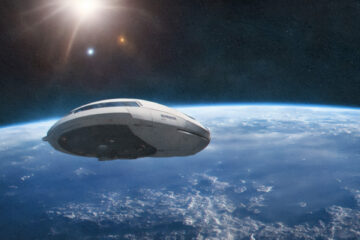
CONCEPT – Interstellar Travel
The Universe of ELZA is a fictional space opera setting that does not NEED to be completely adherent to real life laws of physics. Still, mixing in some hard sci-fi elements adds realism, universal rules and stakes that are missing in so many other properties in this genre. One of the biggest challenges (if not the biggest one) in this regard was invention of in-universe fictional space travel.
What Makes a “Good” Space Travel Technology?
Let’s be frank. All fictional technology has one single purpose – to serve the narrative of the story, be it by making it possible in the first place, or by providing friction that makes it more exciting. So, to “invent” the technology for interstellar travel I wrote down few narrative requirements that has to be met by it:
- The Universe should feel vast and unexplored at times. It means that just like in Star Wars each new adventure may feature one or multiple exotic planets with diverse climates and varying levels of development. To fulfill this requirement, the interstellar travel should be not only possible, but mass-adopted, relatively cheap and convenient enough to be used by common characters.
- Unlike the fully explored Star Wars universe though, the Universe of ELZA should still feel vast and nearly endless. This requirement invites some constrains that keep humans from traveling everywhere across the space and thereby making it feel small and way too familiar to be really exciting. The most simple approach in this regard is to restrict space travel with three factors: time, fuel and engine integrity.
- Lastly, the time paradoxes should be accounted for. In real life, anyone that is traveling with the speed of light becomes “static” in relation to the rest of the universe. It means that any human that is moving faster then light will not age at all meanwhile both the origin planet and destination will experience time at the normal pace. This effect of time dilation may put a strain on the narrative by making every instance of interstellar travel into a major time jump. So a way to avoid time dilation while maintaining FTL travel speeds should be established.
The Subspace Engine
With all those requirements in mind, a Subspace Engine was created. It’s function is based on physical properties of a fictional particles called Deuons (from lat. Deus – god). Deuons are nearly undetectable with modern equipment and are streaming like oceanic currents all across the universe. The speed of Deuons is much faster then of Photons and thereby they are able to travel far beyond the speed of light.
When a spaceship engages its Subspace Engine, it creates a bubble of static space around the ship’s hull. Inside of this bubble the ship and its crew remain still and thereby are not subjected to effects of time dilation. In real space though this bubble of Subspace becomes shrunk to the size of a single Deuon and thereby acquires its physical properties like faster then light acceleration.
This way a spaceship and its crew can travel between stars without constrains of real life physics. Fictional constrains though may include things like high energy requirements for the Subspace engine to function, overheating/wear on the Subspace engine during longer voyages and lastly vulnerability to disruptions by external factors like gravity wells of larger stellar objects.
During the exit to the real space at the end of the journey or during unplanned shutdown of Subspace Engine, the relative expansion of Subspace bubble inside the real space creates a gravitational shock wave that in strength is proportional tho the size of the collapsing bubble. This shock wave is a very simple and organic failsafe that prevents two different bubbles from expanding inside each other.
Disruption of a Subspace Engine may be caused by the gravity of larger stellar bodies. It means that a ship that is equipped with Subspace Engine can not jump on a whim, but has to travel on a sublight speed far away from centers of gravity like nearby stars and planets. Each jump also has be carefully plotted with account for all possible obstacles along the way and with regard to the constant stellar movement.
Regarding the speed of travel with the Subspace Engine, few factors were accounted for: Inside the human-inhabited star cluster (I chose to use a real existing star cluster, but it’s name and location may be considered as a spoiler), the average distance between planets in its core is 0.5 – 0.7 light years, meanwhile the size of the core itself is approximately 8 light years. It makes the speed of Subspace Engine to be in the sweet spot of around 1 week of real time for 1 light year traversed.
It means that traveling across the core of human-inhabited star cluster would take convenient 2 months. Meanwhile the galactic core that is still 26000 light years away and thereby would still be unreachable, since getting there would require 542 years of constant Subspace jumping. This relation between the speed of the Subspace Engine and cosmic location where the story takes place would provide both narrative convenience and necessary constrains that keep the humanity inside their tight star cluster.
Other Means of Interstellar Travel
Use of the Subspace Engine technology that invents fictional physics does also open up possibilities to use real laws of physics in the narrative. For example, an ancient derelict from a civilization that went extinct for a million years, may be only few thousands years old since it has spent all that time virtually frozen still while moving at the speed of light.
There are also plans for exploring other means of interstellar travel like wormholes that bend space-time and provide instant “teleportation” between distant regions of space. Either of natural, or artificial origins, wormholes can be very convenient to use in the narrative as geographically static “checkpoints” that provide access to far regions of space which are not accessible by any other means.