BTS – Imperial Construction Kit
ENTIA here! Hello! Aside from lore and other stuff, I want to share some insights about my process behind things that build the Universe of ELZA. This blog entry will be all about my journey into making interiors for Imperial spaceships that you will be able to see on pages of ELZA Book 1. Enjoy your reading!
Background
Since the introduction of 3D art in this project, I wanted to create fully modeled spaceships for the Universe of ELZA. This was a very ambitious undertake for someone with zero experience in 3D modeling, but the Dunning-Kruger effect has provided me with enough confidence to at least try and take on this challenge.
Early Steps and the Road to V1
The first step towards fully modeled interiors was and attempt to block out future corridors, rooms and hangars with help of basic shapes. This method gave me an approximate idea about the interior layout and its interplay with the exterior of the ship. Below is the image of KRODH, one of two large ships I have commissioned for ELZA, Book 1.
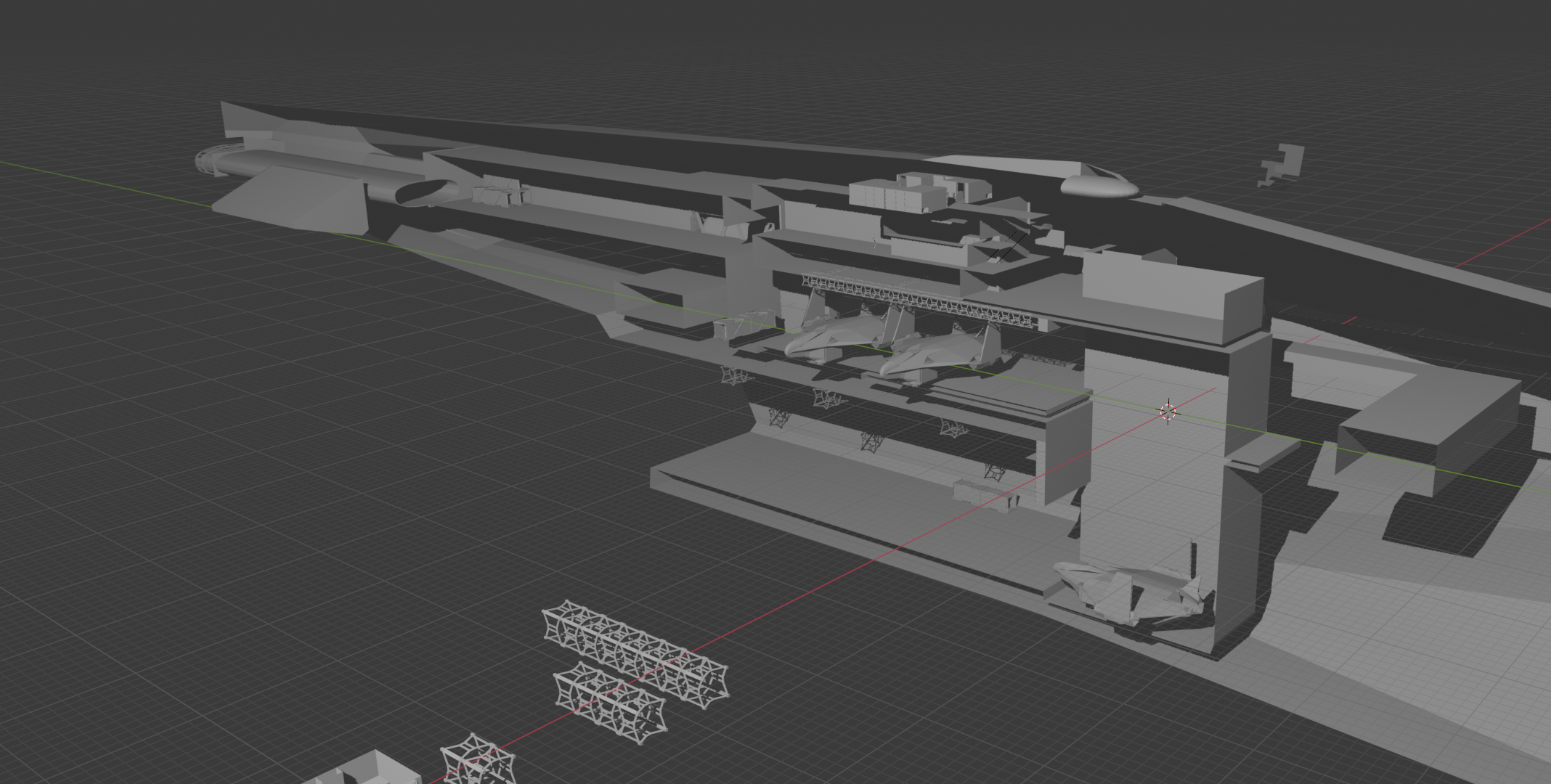
Light Attack Cruiser KRODH, first interior exploration, featuring two hangars, the main elevator, cargo bay and living quarters. Imperial Dropship models are included for reference. April 2025
Obviously, individual modeling of every corridor and every room on two gigantic spaceships was immediately out of question. It would simply take too much time. But since both of these ships belong to a single faction and were designed in an approximately similar time period, creation of a single interior construction kit became a viable answer to this challenge.
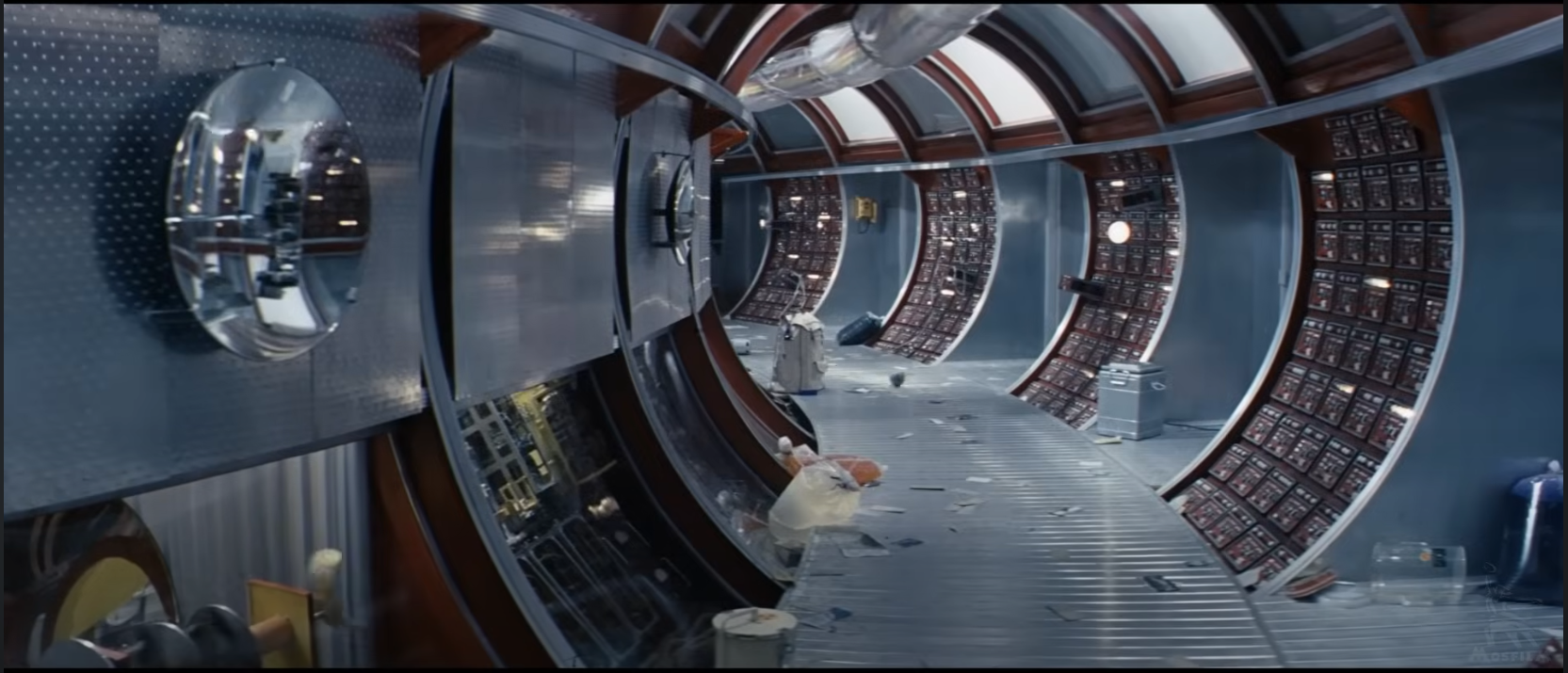
Corridor from SOLARIS (1972) by Andrei Tarkovsky
During the design phase I chose to proceed with rounded shapes. Circles and ovals were chosen to be key design elements for the Imperial aesthetic language. One of my main inspiration pieces turned out to be the interior of the space station from Andrei Tarkovsky’s vision of Stanislav Lem’s novel Solaris.
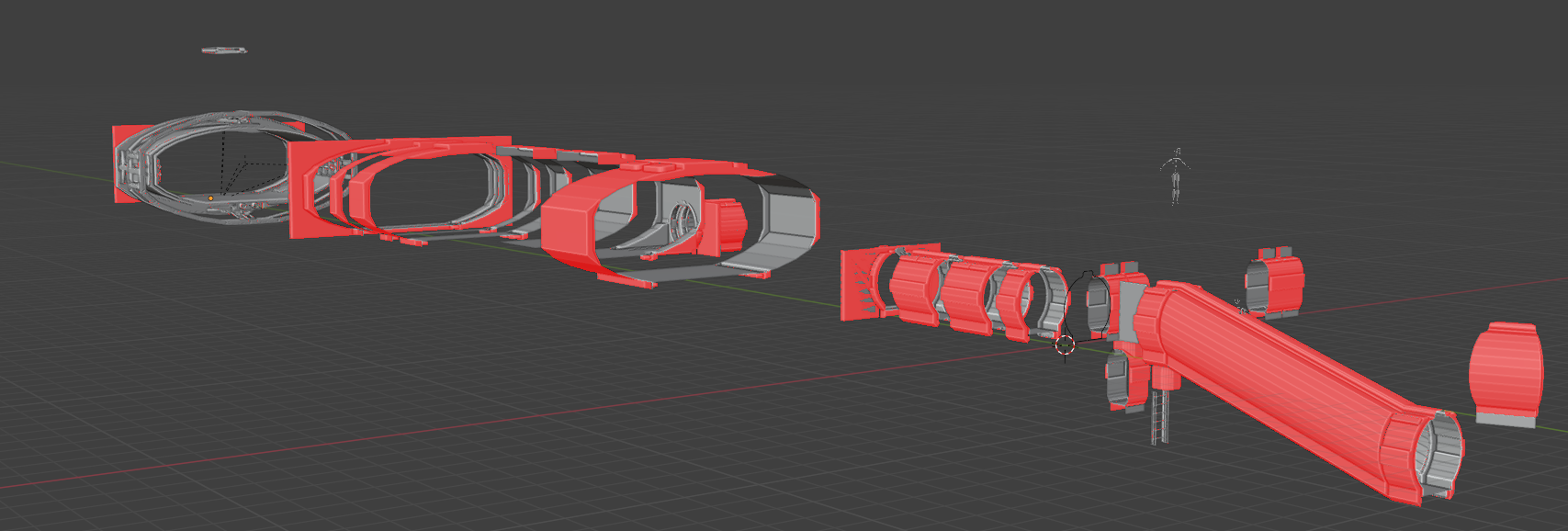
Imperial Corridor Construction Kit V1 included a limited amount of corridor pieces of three types: Standard, Cargo and Auxiliary. July 2025
It was not KRODH, but AGNA, its sister ship with simpler layout that became the test bed for the first version of the Construction kit. Results felt truly amazing! The amount of polygons on the corridor parts was minuscule. Despite that the simple experience of “walking” inside a brand new original ship, that is fully handcrafted by me, felt like magic!
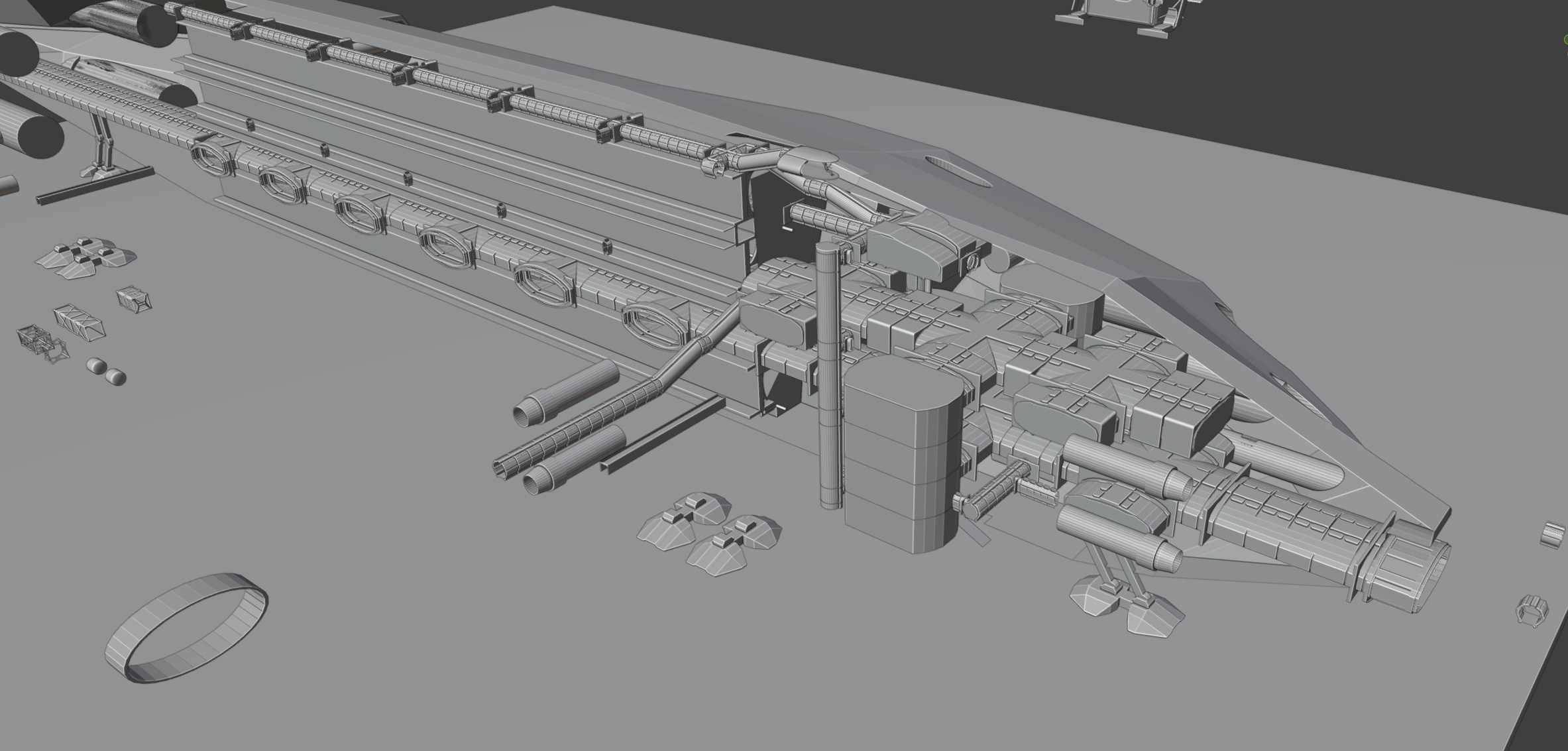
AGNA with partially built interior, first iteration. July 2025
In order to distinguish between different parts of the ship, and even different ships, an additional collection of accessories was built. These pieces were zeroed to effortlessly attach to the base corridor pieces and provide me with a wide variety of choices regarding customization of each level.
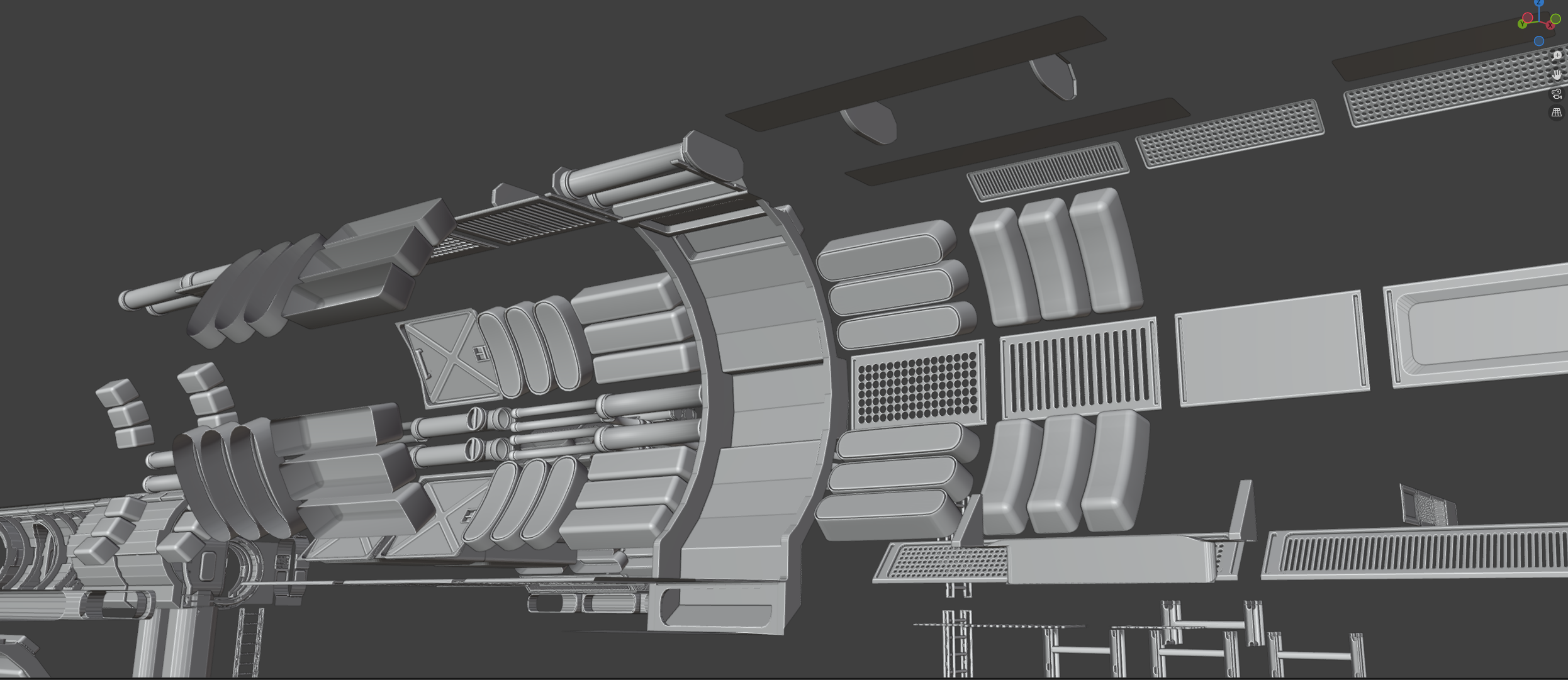
Accessory Kit for the Standard Corridor V1
The next logical step in the development became the scene testing. It’s important to note that the prime use of all these 3D models was to become static set pieces on the pages of a graphic novel. Hence, testing them as a render became a high priority at this stage.
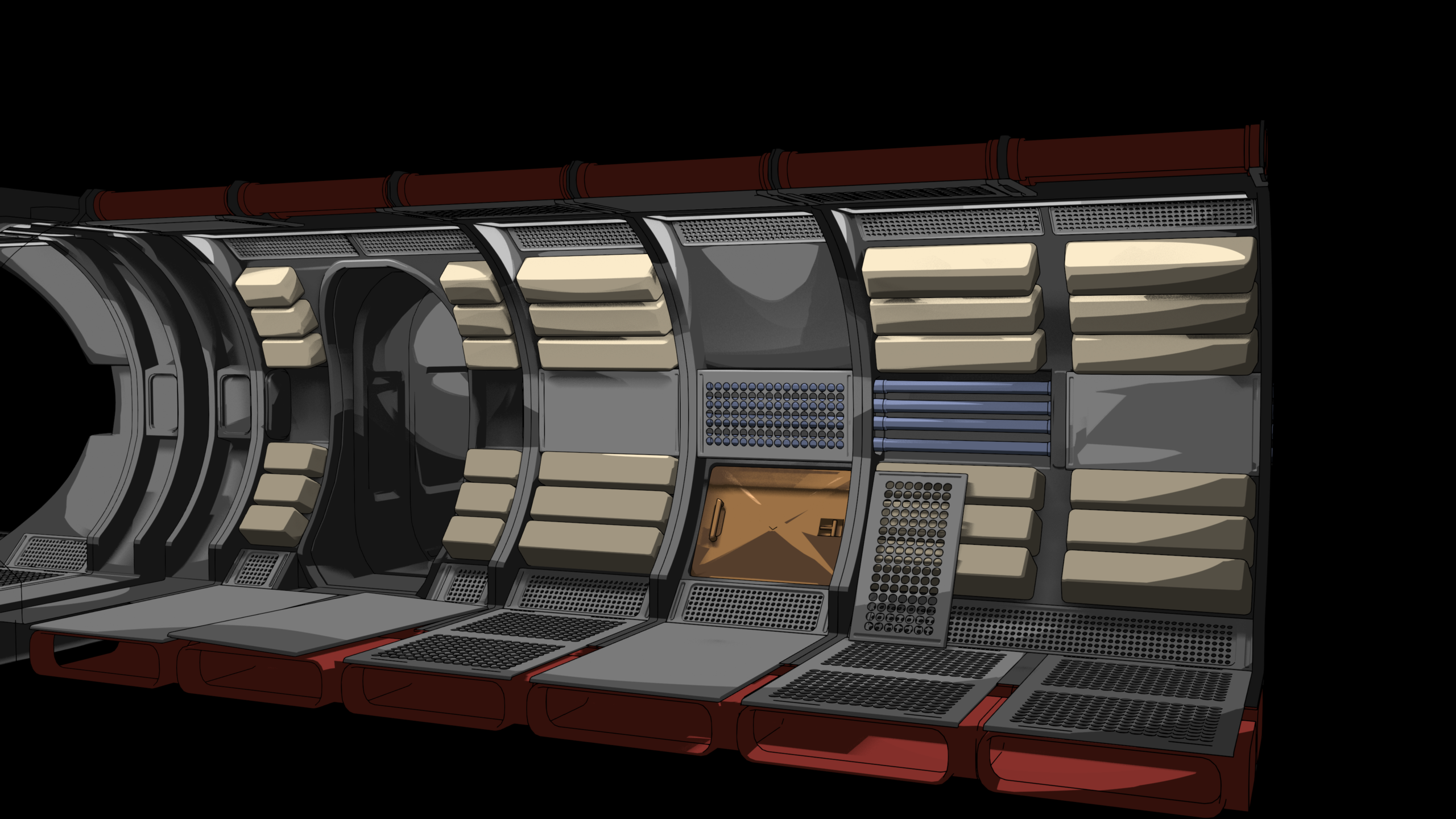
Imperial Corridor Kit V1 – a test render with authentic lights and simple toon shaders applied. Engine – EEVEE. August 2025
The initial test was a strong success because of even basic toon shaders perfectly conformed with the unique style of AI-Assisted characters that are about to populate them.
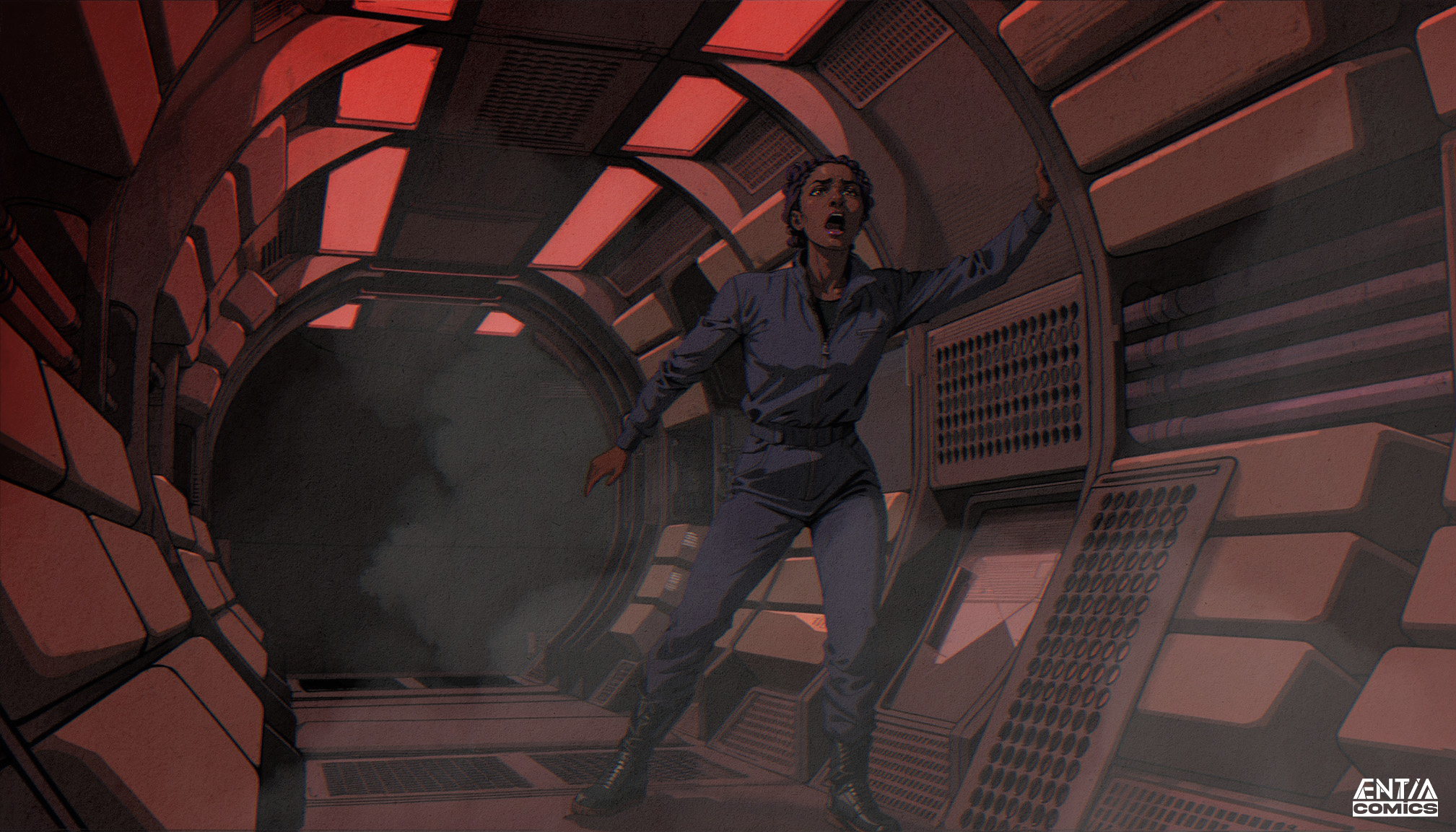
Liubov Pyr running through a dark corridor – first combined media test.
Unfortunately, the low-poly approach did not completely match the desired outcome. Because of that I began work on the Version 2 of this Construction Kit.
Corridor Construction Kit V2
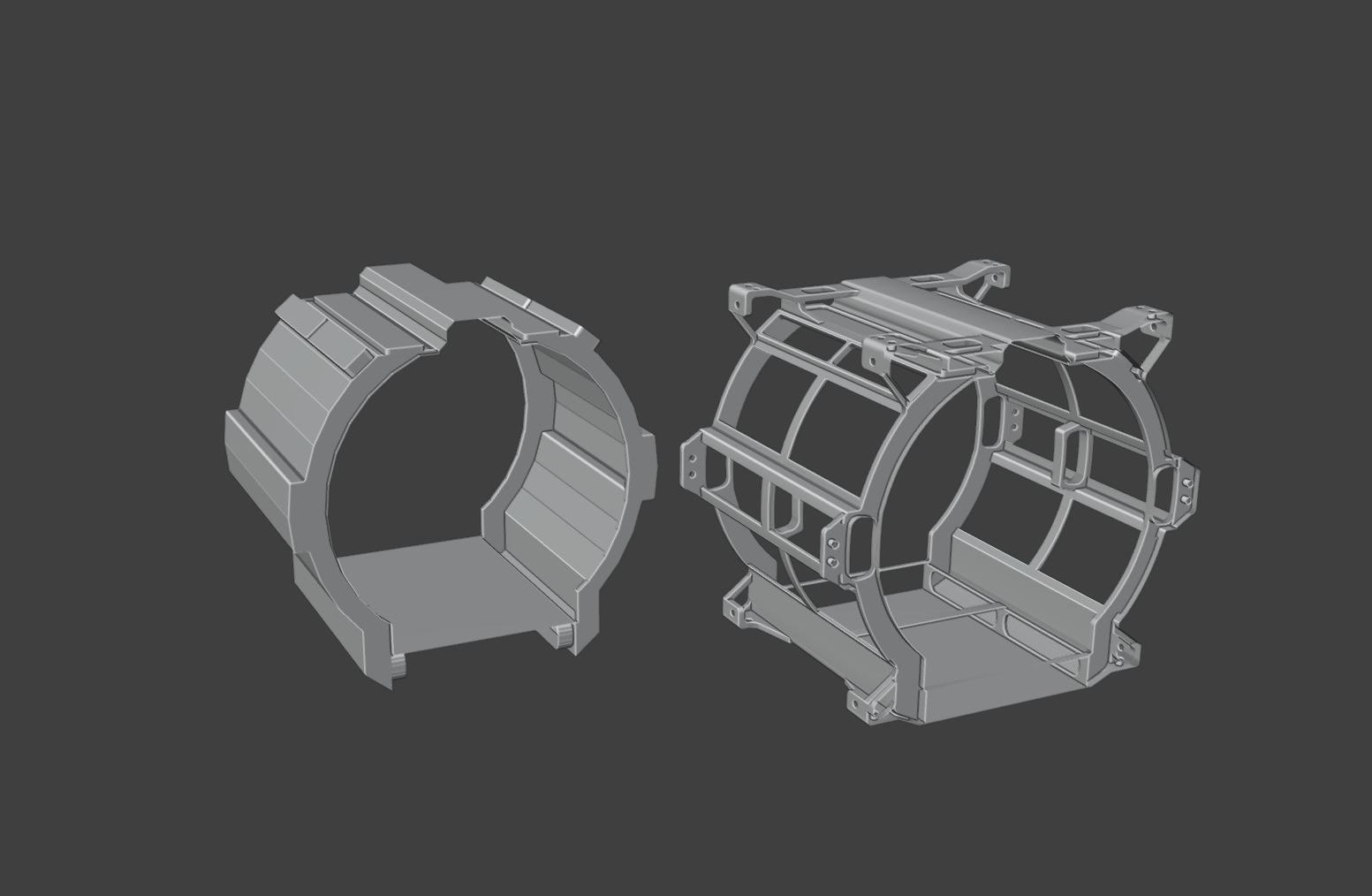
Comparison in-between the Basic Corridor Mid Section from Construction Kit V1 (Left) and Construction Kit v2 (Right). November, 2025
Some may see it as scope creep, but since I have committed to make spaceships with fully developed interiors, complete physicalization of interior pieces opened a bunch of new opportunities. For example, fully developed interior pieces could be used in marketing materials like in-construction shots of the ship, and advanced destruction simulation for the comic.
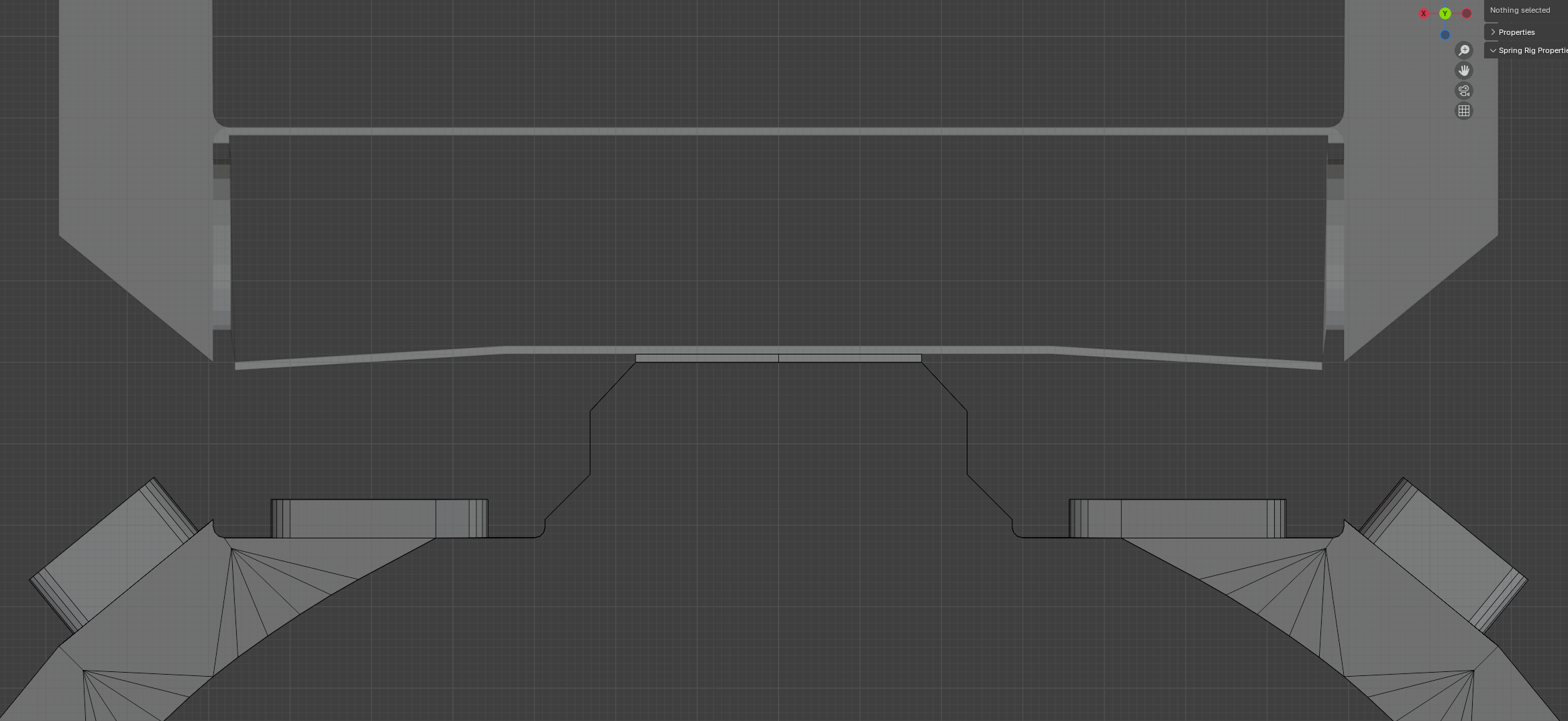
Unexpectedly, with thickness of only 1cm both parts of the Basic Corridor stacked perfectly without clipping into each other. This was pure luck, but it highlights the importance of accounting for material thickness during early stages of work.
It is important to note that pieces from the Construction Kit V1 could not be rendered from the outside since their surfaces had zero thickness and supported textures only on the inner side of the mesh. This is why extending the mesh to a realistic thickness became so important to achieve the vision behind the Construction Kit.
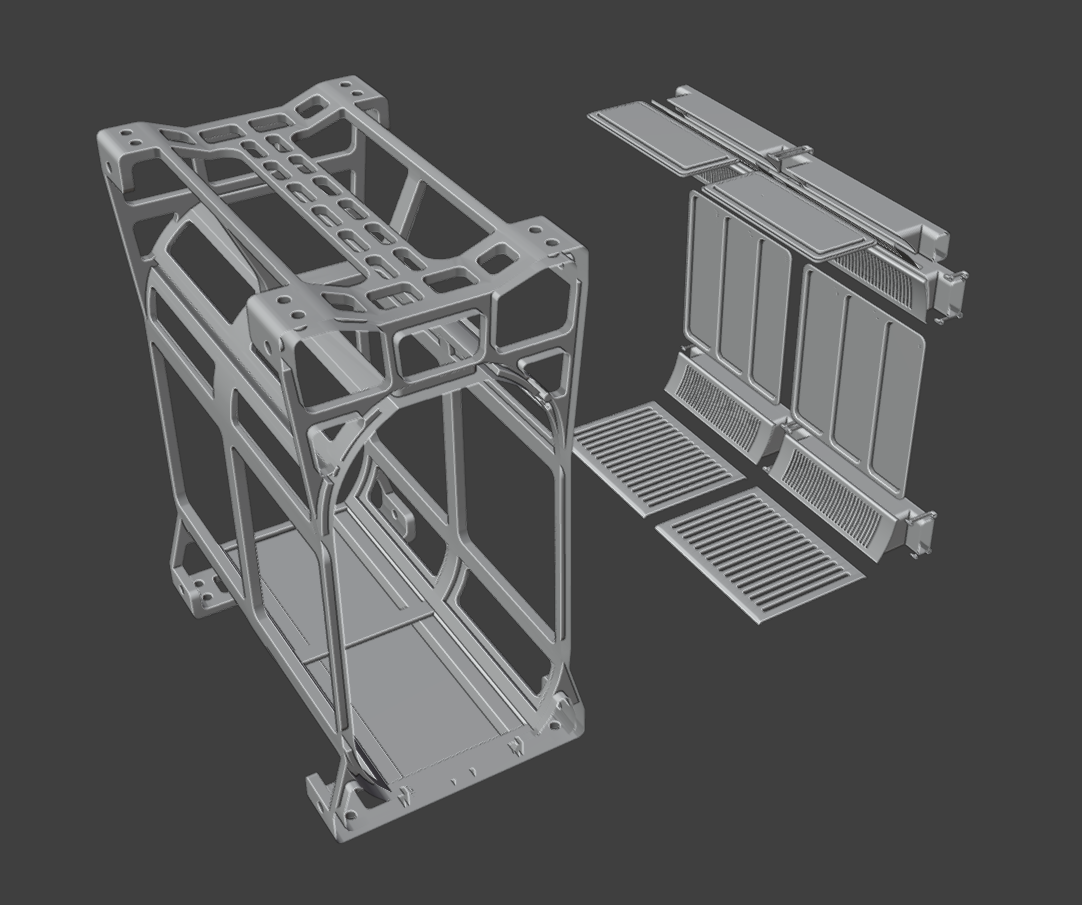
Physicalized Auxiliary Corridor Mid Section V2 with all available customization pieces. December 2025
Converting around a hundred pieces (I did not count them yet!) from the Construction Kit V1 was a bit of a chore, but the results were definitely worth it. Unfortunately new shapes came with new challenges, like the support structures overlapping with the lower floor surfaces.
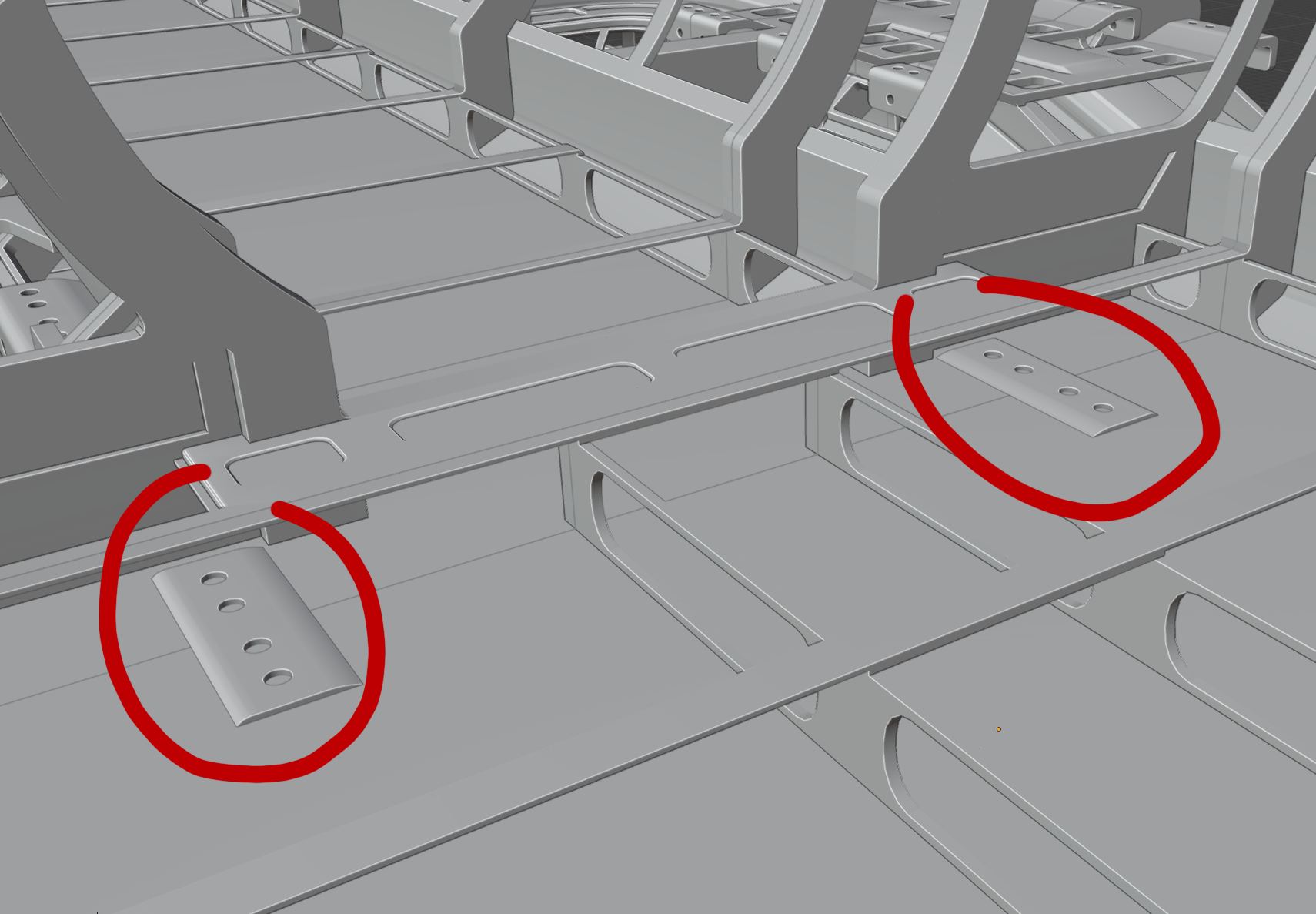
This sight meant that an additional rework of almost all pieces was needed. Such mistakes can cost days or even weeks of productive time. This is why checking all measurements is so important early on.
When all parts were fixed, the work on building spaceship interiors with the help of Construction Kit V2 could continue. As of now, both large ships – KRODH and AGNA contain hundreds of pieces that build their unique interiors.
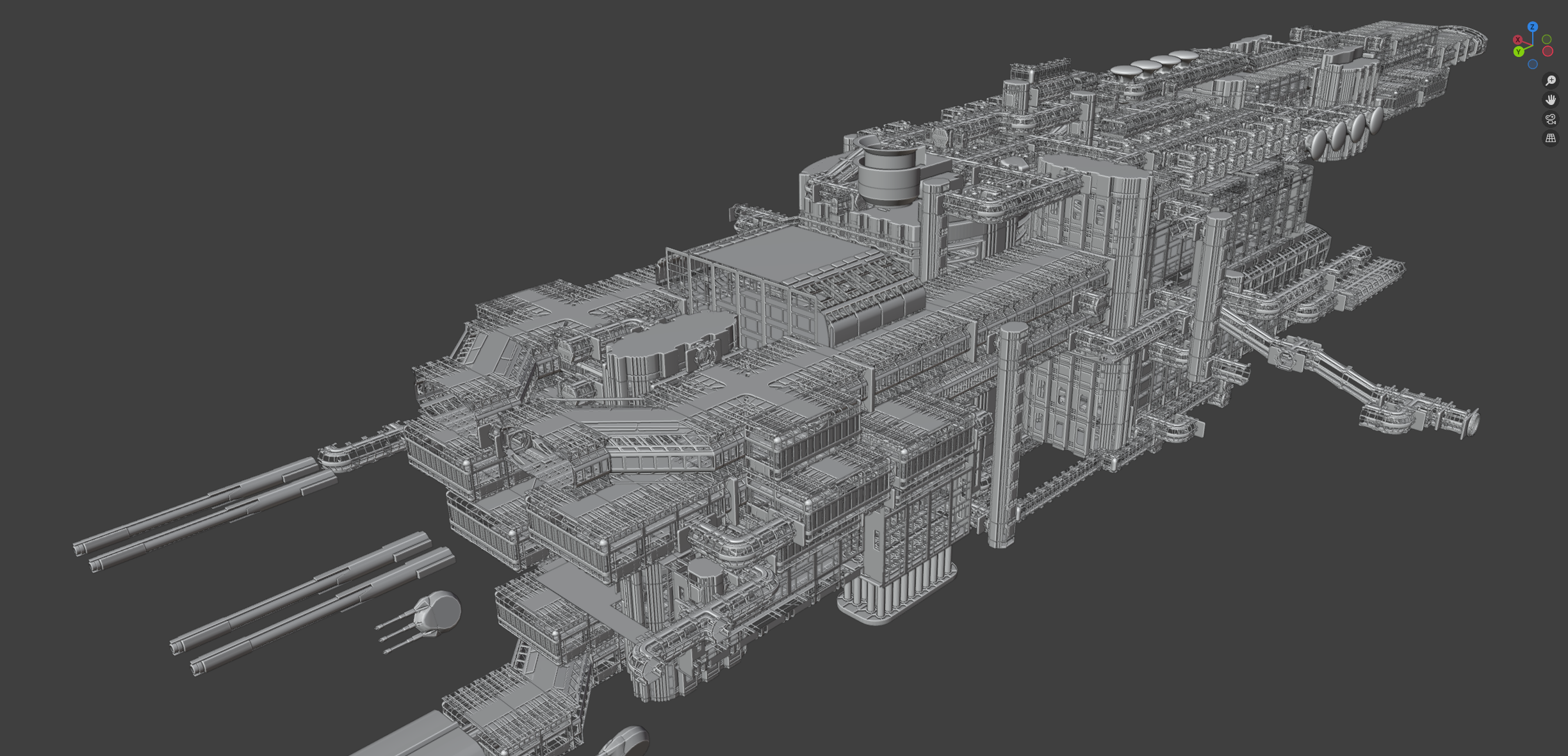
Intermediate version of the interior for the Light Attach Cruiser KRODH. It is made with the Imperial Construction Kit V2 and few ship-specific unique pieces.
But the interior can not just “float” inside an outer body of a ship without any supporting structure. After the first attempt of morphing the superstructure from solid beams, I chose to extend the Imperial Construction Kit to include superstructure parts too.
Latest Expansion and Plans For the Near Future
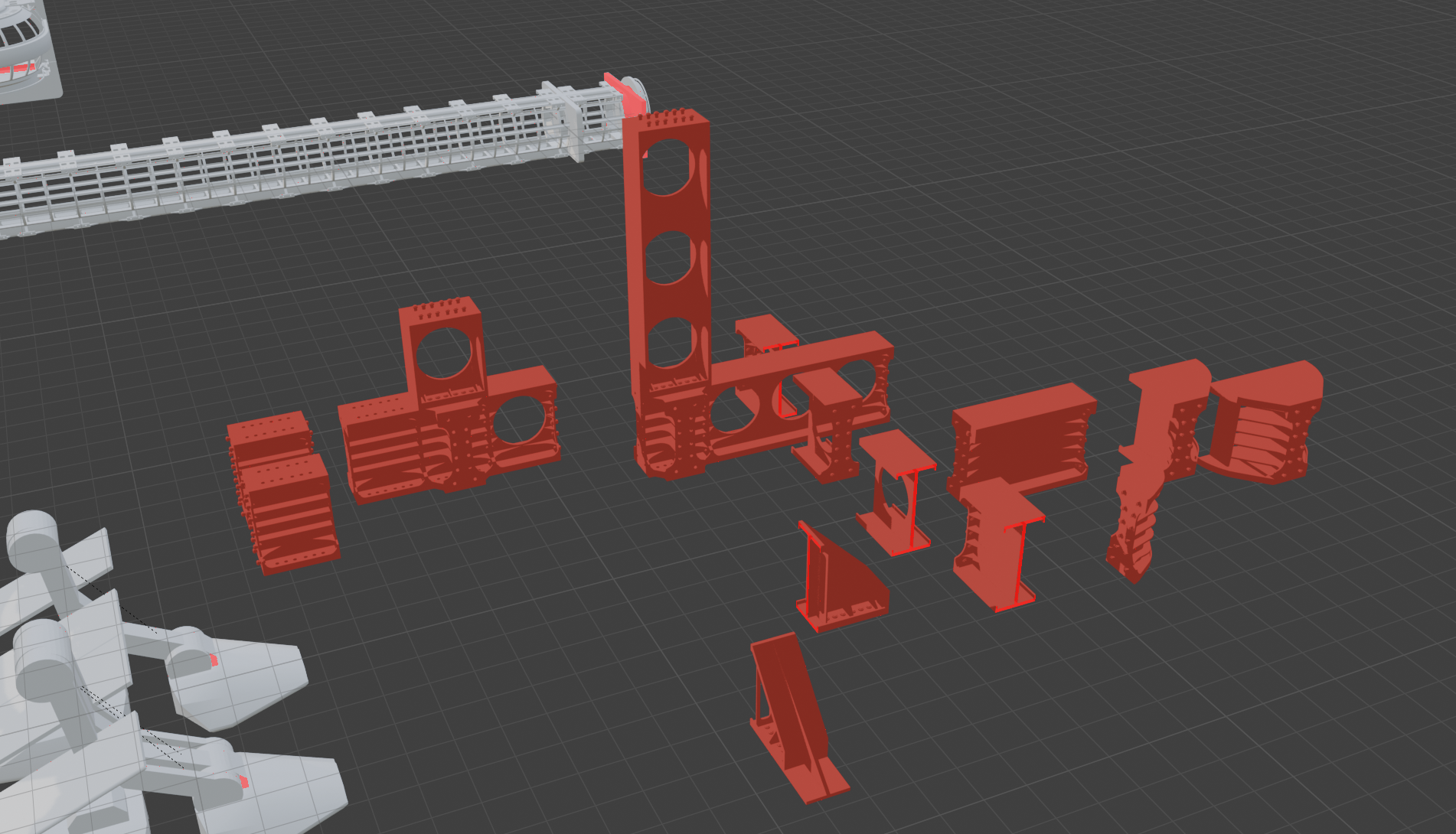
This is an early version of the Superstructure Construction Kit. It was important to keep it significantly low on polygons while maintaining such details like knobs and ribs that make it feel well-developed in closeup shots.
As of now, the Imperial Construction Kit V2 is undergoing further polish together with production of AGNA and KRODH. Multiple updates like addition of new decorative pieces and development of improved procedural materials are still ahead.
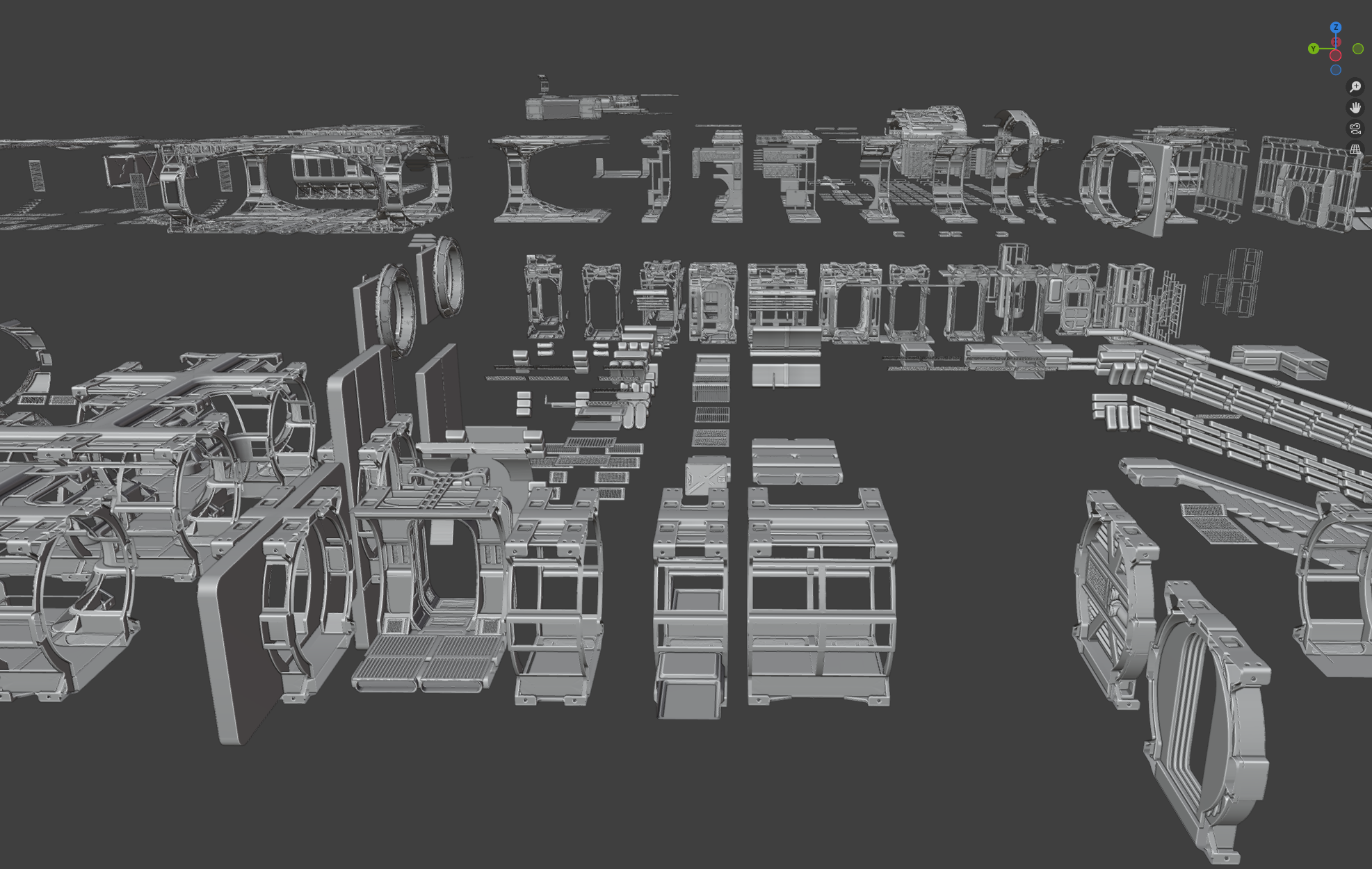
This is a small glimpse at parts that build current Imperial Construction Kit V2.
After work on both ships is complete I expect to end up with a very well-polished version of the the Imperial Construction Kit V2.5 or V3. The goal is to deliver it as a separate product available to all fans of the Universe of ELZA and hobbyists/professionals who would want to use it in their own 3D work.